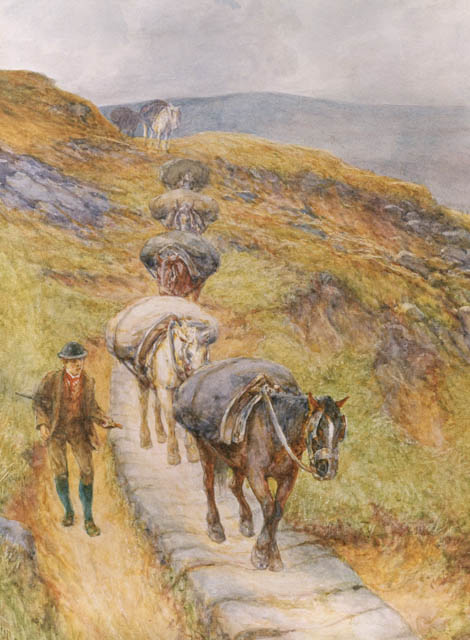
In early days people travelled on foot or on horseback. People using the roads (which were pack-horse tracks laid with causey stones where the nature of the ground demanded it) were usually travelling on business. Long trains of pack-horses or “galloways” would carry lime from Clitheroe, coal from Cliviger or iron from Bradford. On local market days, our local clothiers would use the pack-horse tracks en route to the piece halls at Heptonstall, Halifax or Rochdale. Until the coming of the turn pike roads, the valley tracks were practically non-existent, except at places where they formed a link between the roads on the opposite hillsides. A painting by Alfred Bayes, the Lumbutts-born artist, depicts a packhorse train travelling along the moorland causey stones, which still exist in many places today. The horses, led by a drover, were disciplined to follow the sound of bells fastened to the harness of the leading horse. Each horse carried 120lbs of cargo in his packs.